
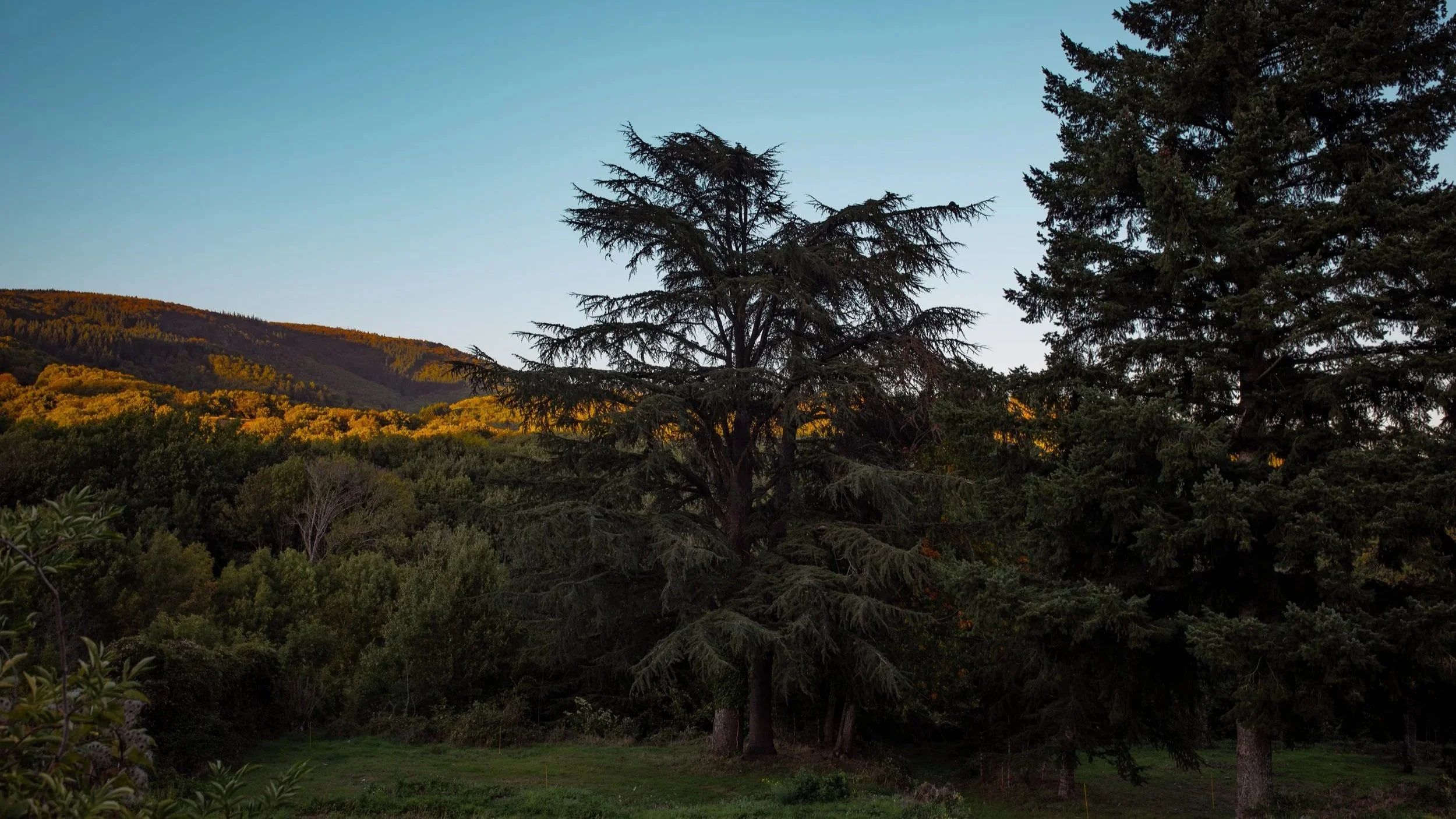
The Land
Fifty-five hectares. Four centuries of cultivation. A working estate within a protected natural park.
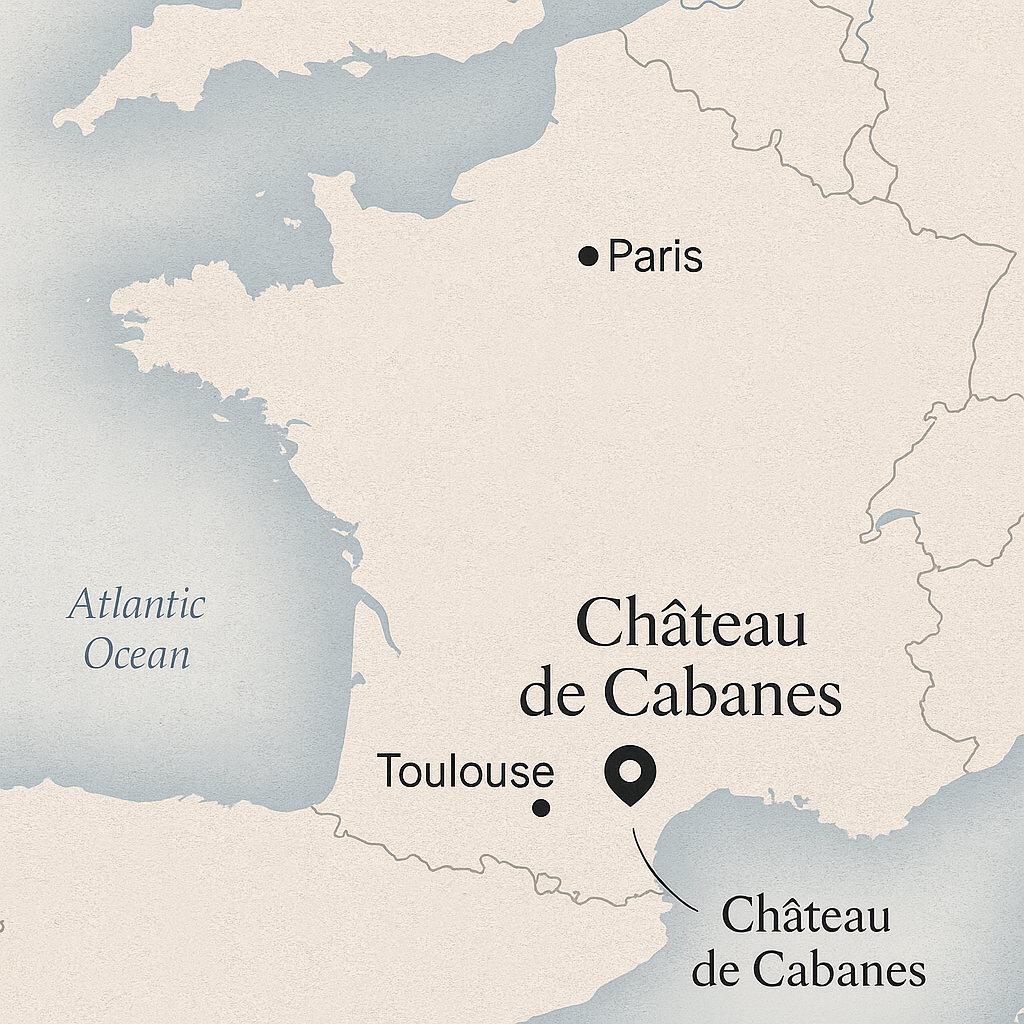
Château de Cabanes sits within the Parc Naturel Régional du Haut-Languedoc—one of France's largest and least developed protected areas. The Cévennes rise to the east. The Mediterranean waits an hour to the south.
The estate itself comprises 55 hectares: forest, meadow, stream, and cultivated land. A waterfall feeds year-round pools cold enough to swim in. Trails wind through chestnut groves to viewpoints that haven't changed in centuries.
This is not wilderness. It's working land—cultivated, managed, productive. But it's land that operates in partnership with the natural systems around it, not in opposition to them.
❋ The Gardens
Chemical-free cultivation that predates synthetic agriculture. Vegetables, herbs, and fruits that appear on your plate hours after harvest.
❋ The Stream
Year-Round flow through the property. The children’s camp sits along it’s banks. Tents face the water. Sleep comes easy to the sound of moving water.
❋ The Forest
Chestnut, oak, and Mediterranean pine. Trails that lead to viewpoints, clearings, and unexpected discoveries. Managed but not manicured.
❋ The Meadows
Where the animals roam. Where the children run. Where the views open up to the valley below and the mountains beyond.
The Haut-Languedoc
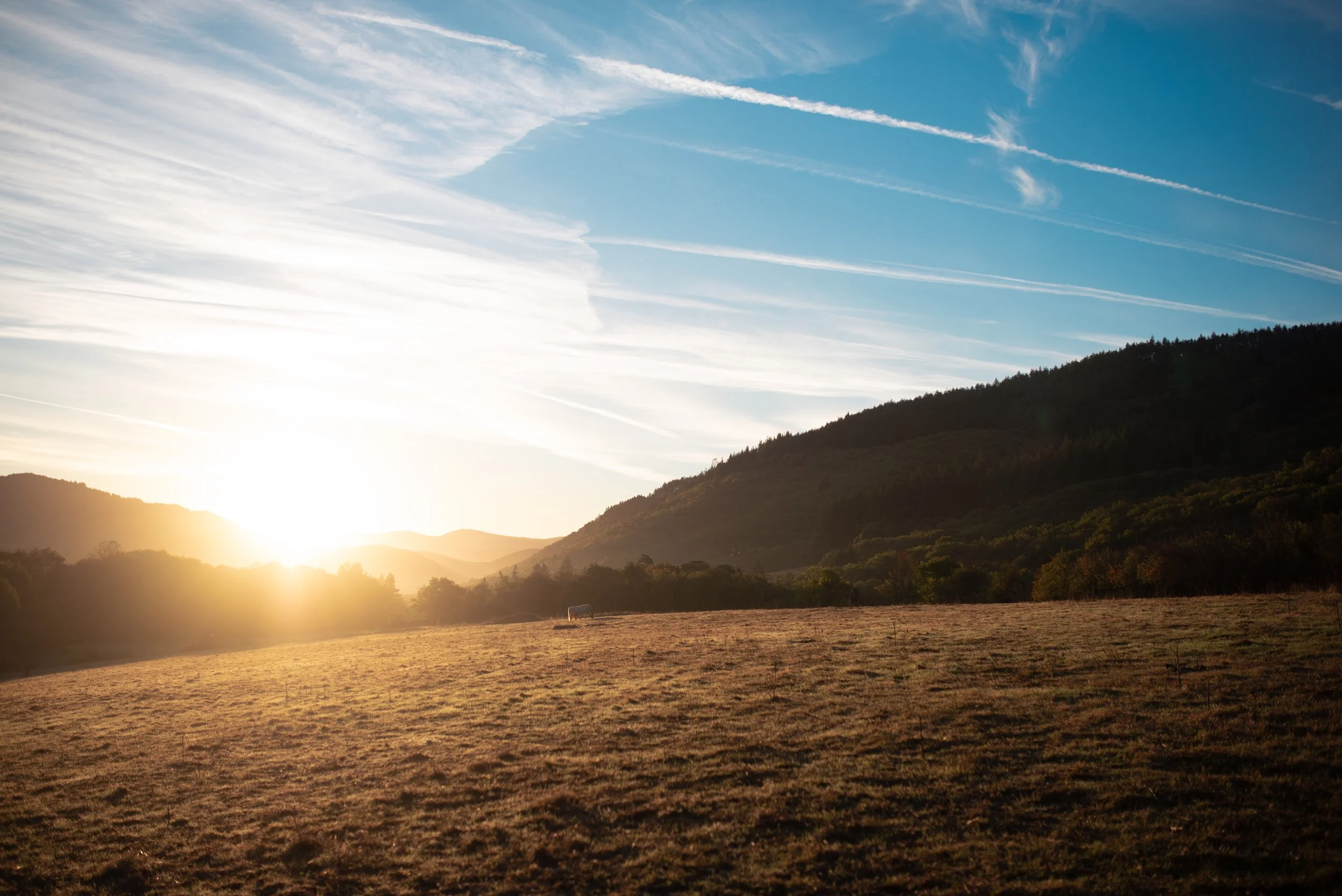
Southern France, but not the south you know.
No crowds. No cruise ships. No English menus in every restaurant. The Haut-Languedoc is the France that existed before mass tourism—small villages, working farms, landscapes that haven't been optimized for visitors.
Carcassonne is forty-five minutes away. The Mediterranean is an hour. Montpellier and Toulouse are equidistant. But most guests don't leave the estate. There's no need to.
Come See For Yourself
Now Booking for Summer 2027