
The Land Feeds the Table
Not a marketing phase. A daily practice
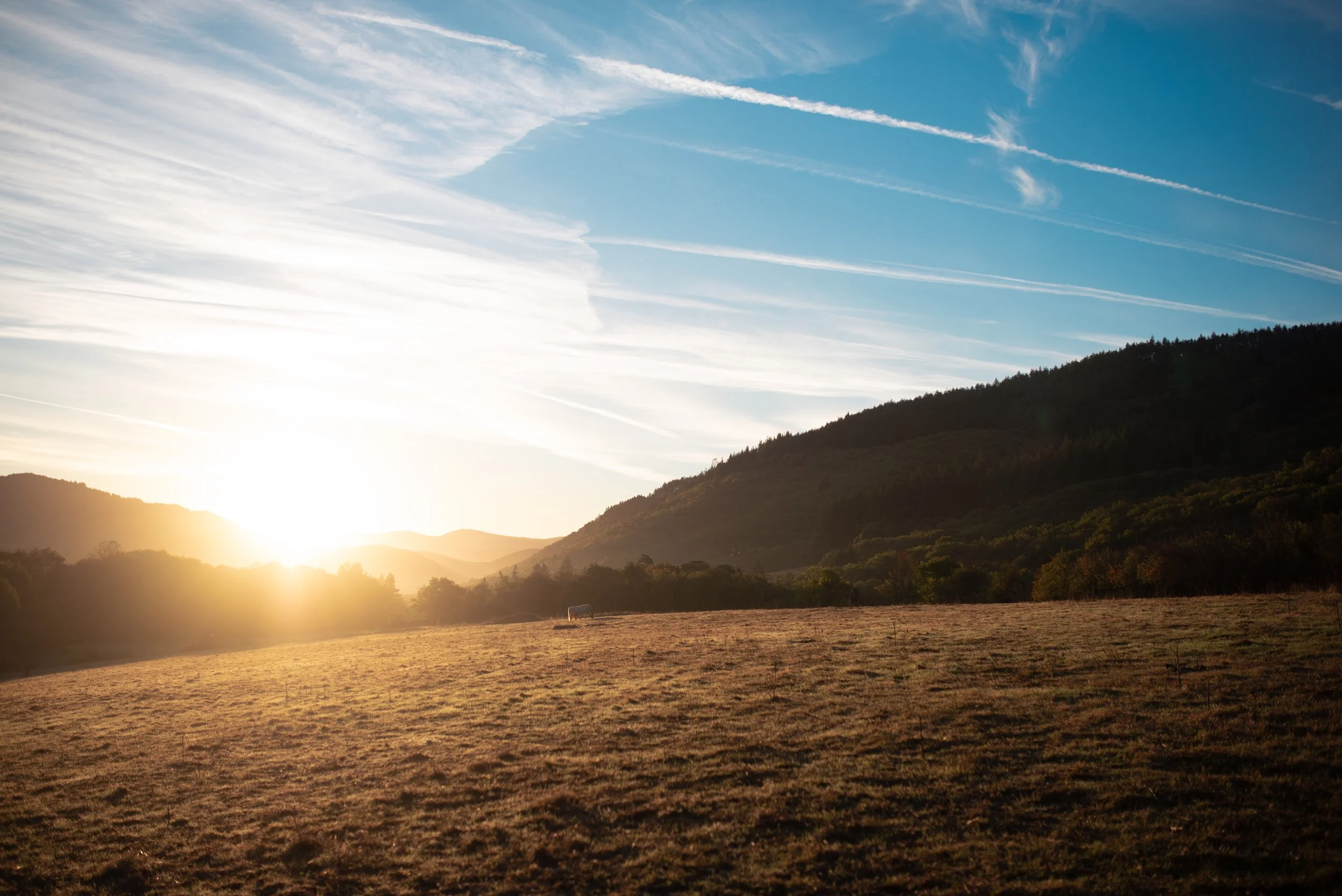
A Working Farm
The estate has been farmed continuously for centuries - without chemicals, without industrial methods, without interruption. The knowledge of what grows here, when to plant, how to nuture the soil, has been passed down through generations.
Today, the farm supplies the kitchen with vegetables, herbs, eggs, honey, and meat. What we can’t grow, we source from neighbors we know by name. The supply chain is measured in kilometers, not continents.
WHAT WE RAISE
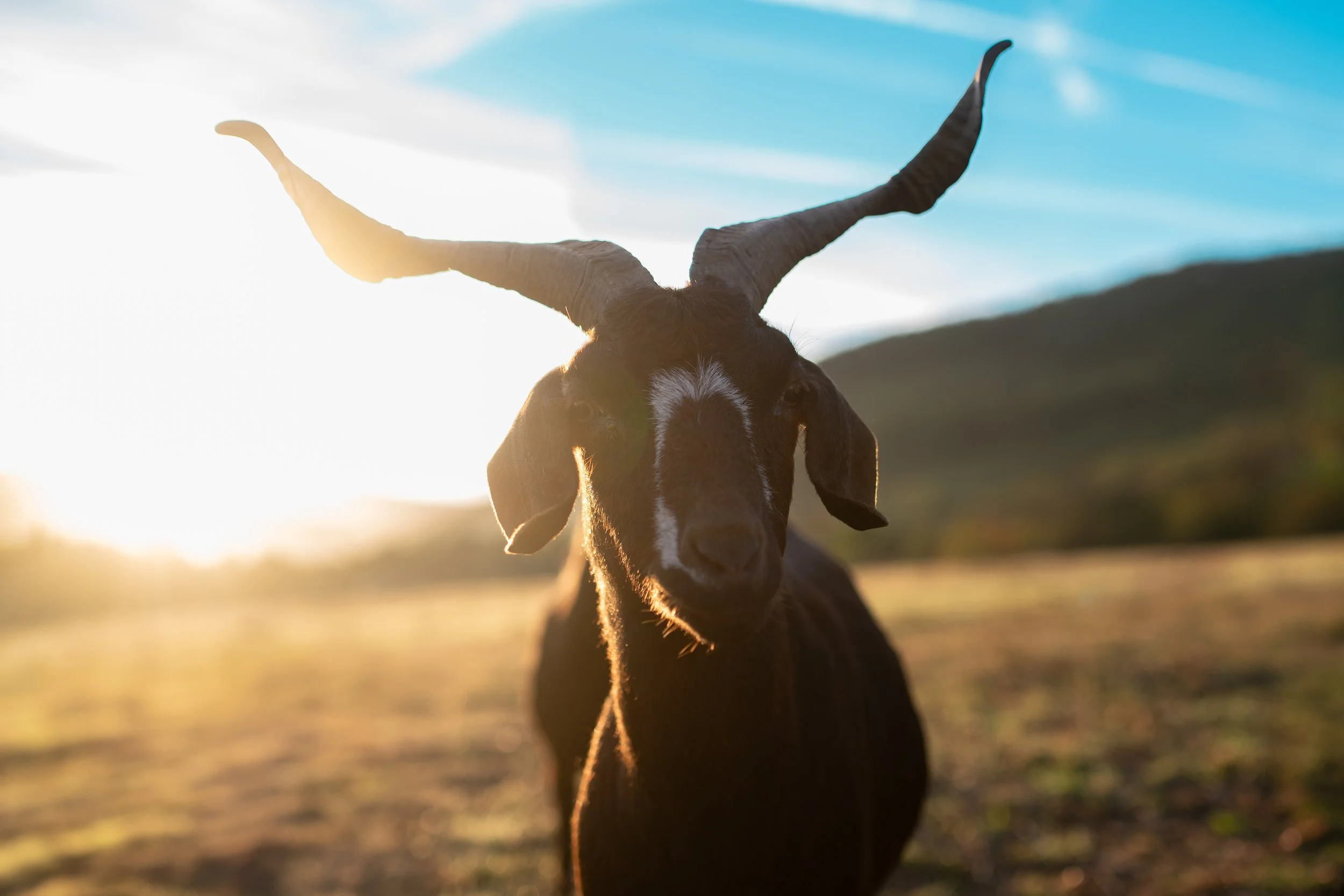
Mangalista Pigs & Heritage Goats
Our Mangalista pigs - the “Kobe beef of pork” - roam the chestnut forest, foraging as pigs have for centuries. The heritage goats maintain the meadows and provide milk for cheese made on-site.
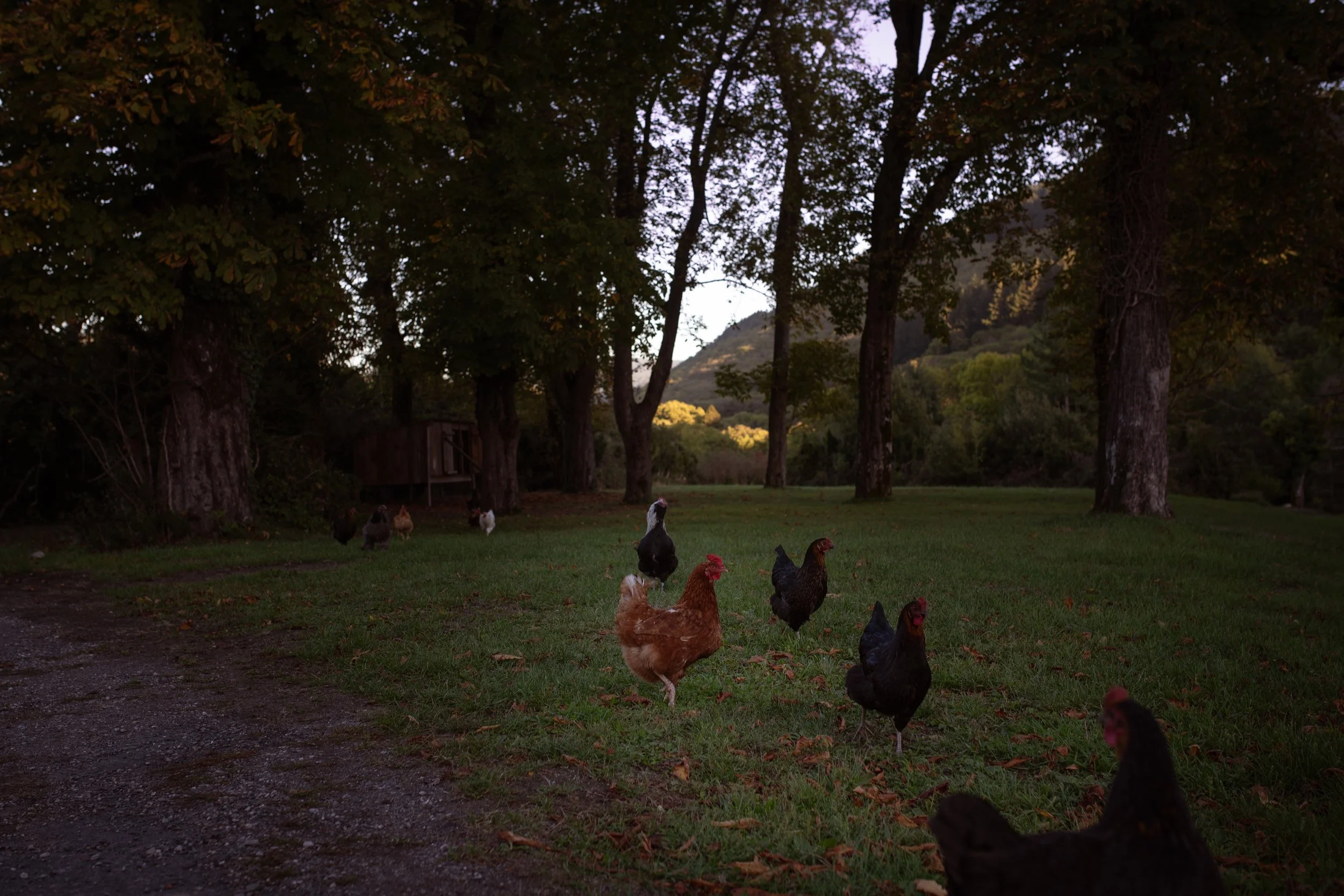
Children in the camp program help with morning feeding. They collect eggs, name the goats, understand where food comes from. It’s not a petting zoo - it’s participation in a living system.
THE TABLE
Where It All Comes Together
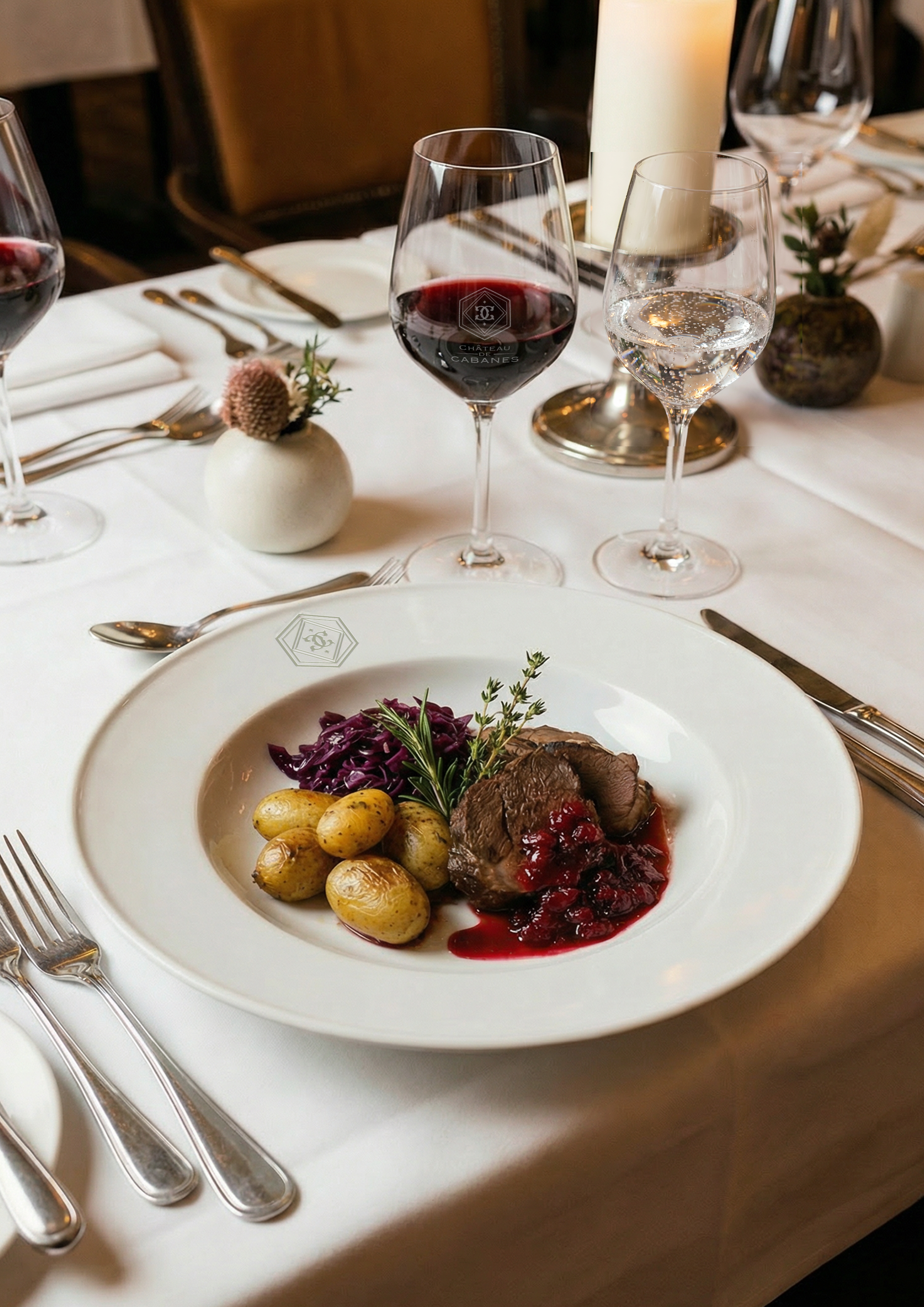
Every evening, the long table is set beneath the stars or in the restored dining hall. The menu changes daily, driven by what’s ripe, what’s ready, what the chef found that morning.
This isn’t a restaurant. It’s a family meal, served family-style, for people who will become familiar faces by week’s end. The wine is local. The conversation is unhurried. The evening belongs to you.
Your Children and the Farm
They won’t just eat the food - they’ll help create it.
Feeding the Mangalista pigs at dawn. Collecting eggs. Harvisting vegitables they’ll see on their dinner plate that night. Understanding, viscerally, where the food comes from.
This is education that sticks. Not because it’s presented as education, but because it’s presented as participation. They’re not learning about farms. They’re working on one.
Summer 2027 reservations are now open.
Founding Season 2027: Select residences will open as the first chapter of Château de Cabanes. Additional amenities, including the children's village and overnight camp experience, will be introduced in future phases of the estate.